
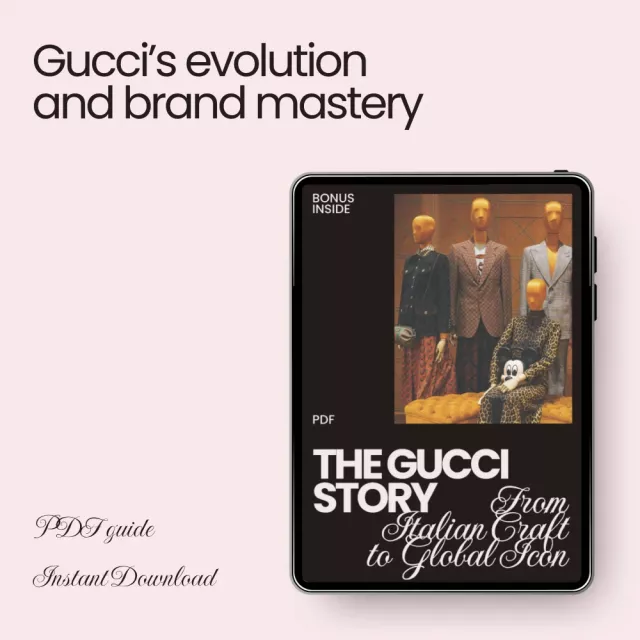
Step into the world of luxury, innovation, and bold reinvention with The Gucci Story: From Italian Craft to Global Icon. This expertly crafted ebook delivers a complete gucci brand history overview, guiding you from the cobblestone streets of Florence to the dazzling global runways of today. Whether you are a fashion enthusiast, aspiring designer, marketer, or brand strategist, this digital guide uncovers the milestones, missteps, and masterstrokes that shaped Gucci into a cultural powerhouse.
This is more than a timeline. It is a behind-the-scenes look at family ambition, iconic design, celebrity influence, business drama, and cutting-edge digital strategy—all in one accessible, engaging resource.
Who is this for? This ebook is ideal for fashion students, luxury brand enthusiasts, content creators, small business owners, and anyone fascinated by how heritage brands stay relevant in a fast-changing world.
What makes it different? Unlike surface-level summaries, this guide blends historical storytelling with modern marketing analysis, including AI integration and practical brand-building steps. It bridges past and future—making it both educational and actionable.
If you want a deeper understanding of how a small Florentine leather shop became a global icon, this is the resource you’ve been looking for. Add The Gucci Story: From Italian Craft to Global Icon to your cart now and gain instant access to a powerful gucci brand history overview that will inspire your creativity and sharpen your brand strategy.
Click download and start exploring the legacy today.
All orders can be cancelled until they are shipped. If your order has been paid and you need to make a change or cancel an order, you must contact us within 12 hours. Once the packaging and shipping process has started, it can no longer be cancelled.
Your satisfaction is our #1 priority. Therefore, you can request a refund or reshipment for ordered products if:
We do not issue the refund if:
*You can submit refund requests within 15 days after the guaranteed period for delivery (45 days) has expired. You can do it by sending a message on Contact Us page
If you are approved for a refund, then your refund will be processed, and a credit will automatically be applied to your credit card or original method of payment, within 14 days.
If for any reason you would like to exchange your product, perhaps for a different size in clothing. You must contact us first and we will guide you through the steps.
Please do not send your purchase back to us unless we authorise you to do so.
Your purchase will be available to download once payment is confirmed.
Instant download items don’t accept returns, exchanges or cancellations. Please contact us if you have any problems










The Savoy Hotel origin story in Chapter 1 completely reframed how I understand the brand — Guccio seeing luxury luggage in London and bringing that vision back to Florence is such a compelling founding narrative.
Seven chapters and every one earns its place. The Tom Ford reinvention section in Chapter 4 was the standout for me — I had no idea Gucci was near obscurity before he arrived. The way he brought glamour and sex appeal back while respecting the craftsmanship roots is a masterclass in brand revival. The AI prompts in Chapter 7 were a nice practical bonus too.
The family dynasty section reads like a soap opera — in the best way.
Chapter 6 on brand management pitfalls is where this guide separates itself from typical fashion history. The breakdown of how overextension dilutes exclusivity and how Gucci controls its distribution channels gave me frameworks I'm already applying to my own small brand.
Didn't expect a Gucci PDF to teach me about brand strategy, but here we are.
The bamboo bag origin — born from wartime material scarcity — is my favorite detail in the whole guide. Innovation out of constraint is such a powerful lesson.
Solid history but the AI sections feel repetitive across chapters. Every practical insight ties back to AI in ways that start to feel forced after Chapter 3.
The 1953 New York boutique story and the celebrity connections that followed set the stage perfectly for Chapter 3.
I'm a marketing student and Chapter 5 alone justified the read. The Gucci Aria campaign case study and the #GucciGram project breakdown showed exactly how heritage and digital storytelling can coexist. I used the viral campaign analysis framework for a class presentation and got the highest grade in my section. The AI prompt examples in Chapter 7 are now in my swipe file for every research assignment.
Clean writing, strong structure, and it respects your time across all seven chapters.
The hip-hop culture section in Chapter 3 was fascinating — Gucci becoming a symbol of success through music lyrics in the 90s and 2000s is such an organic form of brand building.
Decent overview. Chapter 4 on challenges and reinvention is the strongest part, but the earlier chapters cover fairly well-known ground without adding much new perspective.
The heritage anchoring concept from Chapter 6 — every product ties back to a recognizable element of Gucci's history — is the kind of principle I wish I'd learned years ago when launching my accessories line. I spent two years chasing trends instead of building identity. After reading this, I went back and mapped my own brand's core elements the way the guide describes Gucci's GG logo, horsebit, and bamboo motifs. Already feels more cohesive.
The family feuds section is wild — competing visions nearly destroyed the brand in the 70s and 80s 🤯
Chapter 7's four brand-building lessons — heritage, innovation, cultural awareness, quality — are simple but exactly right.
Good content overall but the AI practical insights start blending together. A more varied set of takeaways would've kept each chapter feeling distinct.
The Tom Ford chapter alone is worth the download.
I appreciated the balance between storytelling and strategy. Most fashion guides pick one — this does both and does both well. The Gucci x Balenciaga mention under controlled collaborations was a smart example of creating excitement without diluting identity.
🔥👜⭐✨🇮🇹
The copycat designs section in Chapter 6 raised a point I never considered — how over-innovation can actually erode brand recognition just as much as imitation can.
Read it on a flight and couldn't put it down — the management conflicts chapter plays out like drama.
The guide is informative but leans heavily on AI applications in almost every section, which sometimes distracts from the fashion history. When it stays focused on Gucci's actual story and decisions, it's excellent.
Chapter 2's explanation of how the GG logo became a hallmark of authenticity rather than just decoration gave me a new lens for evaluating luxury branding in general.
The equestrian-inspired pieces section connecting belts and shoes to Italy's horse-riding culture added depth I wasn't expecting from a free guide.
I teach a fashion business course at a community college and I've been looking for something that bridges brand history with modern marketing strategy. This nails it. The progression from origins to pop culture to challenges to lessons mirrors how I structure my own syllabus. Chapter 5's key takeaways about marketing being storytelling, experience, and cultural resonance are going straight into my lecture slides. Already assigned it as optional reading.
The Guccio Gucci section paints him as a visionary artisan, not just a businessman — that distinction matters.
Engaging from the Florence workshop to the digital era. Well paced throughout.
The AI prompt examples in Chapter 7 are surprisingly practical — I copied the trend forecasting one and got useful results within minutes 👏
Would have appreciated more on the transition period between Tom Ford leaving and Michele arriving. That gap is glossed over.
The controlled collaborations concept clicked for me — limited-edition partnerships create buzz without cheapening the brand. Smart framework for any business.
❤️👌🔥⭐👜
Chapter 3 on pop culture is where this guide hits its stride — the thread from Grace Kelly through hip-hop to modern celebrities shows how Gucci stayed relevant across completely different cultural moments.
The brand pitfalls chapter should be required reading for anyone starting a fashion label.
Some interesting content but it reads more like a brand strategy document with Gucci examples than a deep fashion history. If you're here for the craft and design details, you might want more. If you're here for the business lessons, it delivers.
The Michele era coverage — maximalism, eclecticism, inclusivity, digital-first approach — explains exactly why Gen Z fell for Gucci. That section connected dots I'd been missing.
I run a streetwear brand and the section on Gucci blending luxury with urban authenticity in Chapter 3 gave me permission to stop choosing between those two worlds. Before reading this, I thought you had to pick a lane — premium or street. Gucci's playbook of creating something that feels both accessible and exclusive changed my positioning entirely. Rewrote my brand brief the same week.
The legacy mindset concept — focusing on longevity in both product durability and brand reputation — is such a clean framework.
Covers a century of brand history without dragging. Impressive pacing.
Wish it included more specific financial data around the Tom Ford revenue surge. The narrative is compelling but numbers would've made it even more persuasive.
The five steps for building your brand legacy in Chapter 7 are the kind of actionable takeaway most fashion guides skip entirely.
💚🐎✨👏🔥💯
The experiential marketing section — pop-ups, installations, immersive events — showed me how Gucci keeps consumers emotionally connected beyond just selling products.
That detail about the Gucci family losing majority control by the early 90s was news to me. The fact that the brand survived that and came back stronger under outside leadership says a lot about how deeply the identity was embedded 😮
Strong foundation chapters, solid middle on challenges, and a practical finish. Well-structured guide.
The AI counterfeit detection case study in Chapter 6 was unexpectedly interesting — using image recognition to protect brand integrity is a smart modern application.
Not bad for a free resource. Covers the broad strokes well. Experienced fashion professionals might find it entry-level, but for anyone building a brand or studying luxury marketing, it's a useful starting point with decent case studies.
The conclusion framing Gucci's journey around four pillars — heritage, innovation, culture, technology — ties the whole guide together beautifully.
From Florence leather workshop to global icon in seven clear chapters. Exactly the kind of brand narrative breakdown I was looking for.
The consumer insights AI prompt example from Chapter 7 — about summarizing sentiment around luxury handbags — is one I'll actually use in my market research. Practical and specific.